

Sustainability · 2025
In this section52 topics
- Sustainability Policy2 items
- Sustainability Goals & UN SDGs3 items
- Policy Review3 items
- Business Value Chain2 items
- Stakeholder Analysis1 item
- Environmental Sustainability — Overview1 item
- Environmental Policy & Guidelines6 items
- Environmental Policy Review3 items
- Energy — Plan & Guidelines1 item
- Energy — Electricity Consumption1 item
- Energy — Fuel Consumption1 item
- Energy — Targets1 item
- Energy — Performance & Outcomes2 items
- Water Management — Overview1 item
- Water — Plan & Guidelines1 item
- Water — Withdrawal, Discharge & Consumption1 item
- Water — Targets1 item
- Water — Performance & Outcomes2 items
- Waste — Plan & Guidelines5 items
- Waste — Generation, Disposal & Recycling2 items
- Waste — Targets1 item
- Waste — Performance & Outcomes2 items
- GHG — Plan & Guidelines1 item
- GHG — Emissions1 item
- GHG — Emissions Verification1 item
- GHG — Targets1 item
- GHG — Performance & Outcomes2 items
- Environmental Legal Incidents1 item
- Social Sustainability — Overview1 item
- Social Policy & Guidelines5 items
- Social Policy Review1 item
- Social — Principles & Standards Practised1 item
- Human Rights Due Diligence1 item
- Employees — Plan & Guidelines3 items
- Employees — Workforce2 items
- Employees — Remuneration & Provident Fund2 items
- Employees — Training & Development2 items
- Employees — Occupational Health & Safety2 items
- Employees — Labour Relations2 items
- Employees — Employee Representation3 items
- Employees — Targets2 items
- Employees — Performance & Outcomes2 items
- Customer Management — Overview1 item
- Customers — Plan & Guidelines3 items
- Customers — Satisfaction Results1 item
- Customers — Targets2 items
- Customers — Performance & Outcomes2 items
- Community & Social — Overview1 item
- Community & Social — Plan & Guidelines3 items
- Community & Social — Targets2 items
- Community & Social — Performance & Outcomes2 items
- Law Violation Incidents1 item
Sustainability Policy
Has a Sustainability Policy
Yes
Policy Description
Supreme Distribution Public Company Limited recognizes the importance of conducting business with a strong commitment to environmental and social responsibility, human rights, and good corporate governance, in order to maximize benefits for shareholders, stakeholders, and related parties. To reinforce its commitment to sustainable business practices, the Company has established a sustainability management policy to ensure that environmental, social, and governance (ESG) principles are integrated into its business operations and corporate strategies, aligning with the Sustainable Development Goals (SDGs) as follows:
Sustainability Goals & UN SDGs
Has Sustainability Goals
Yes
Goals Description
Sustainability Management Goals
The Company has established governance guidelines for sustainability management to drive business operations toward core objectives and sustainable growth as follows:
The Board of Directors prioritizes the development of business strategies and annual plans that align with the Company’s vision, mission, goals, and organizational values, ensuring that they are appropriate for short-term, medium-term, and long-term objectives.
The Board of Directors ensure that the strategies and annual plans align with the Company’s objectives and incorporate the analysis of the environment and risk factors that may impact stakeholders in the business value chain, as well as factors that may affect the Company's objectives and achievement of core goals, with a focus on the genuine needs of stakeholders.
The Board of Directors oversees that executives and employees conduct business to achieve goals appropriately under good governance principles, ensuring operations align with the Company’s vision, mission, goals, organizational values, and prevent risks from setting goals that may lead to operational inconsistency with good governance principles.
The Board of Directors ensure that executives and employees in all departments are aware of the importance and guidelines for implementing business strategies and annual plans comprehensively.
The Board of Directors ensure there are sufficient personnel to monitor the implementation of strategies and annual plans.
Furthermore, the Company emphasizes conducting business in a way that promotes a good organizational culture. The Company has established its business principles as 7 core values (SUPREME) as follows:
S = Social Focus on sourcing products, services, and technology to improve the Quality of Life, considering sharing, assisting, and developing society and the environment.
U = Unity Cultivate a culture and instill teamwork within the organization.
P = Product Select products and services that meet customer needs, ensuring that they are of high quality through inspection and certification processes, to meet customer requirements and function efficiently.
R = Relationship Focus on building good relationships with stakeholders both internal and external organization.
E = Ethics Operate on the principles of good corporate governance with transparency and accountability.
M = Management Manage operations professionally with honesty, and sincerity toward customers, prioritizing customer benefits
E = Empowerment Develop new innovations through the collaboration and creativity of employees, business partners, and customers to expand the market for sustainable products and services that are appropriate for rapidly changing technologies.
The Company operates in the information and communication technology business as a comprehensive solution provider (System Integrator). Therefore, it has selected the United Nations Sustainable Development Goals (SDGs) that align with its business nature, focusing on goals related to digital infrastructure development, innovation, efficient resource management, good corporate governance, and collaboration with business partners, to create sustainable value for all stakeholders.
UN Sustainable Development Goals
| SDG Goal |
|---|
| Goal 3 Good Health and Well-being |
| Goal 8 Decent Work and Economic Growth |
| Goal 9 Industry, Innovation and Infrastructure |
| Goal 11 Sustainable Cities and Communities |
| Goal 12 Responsible Consumption and Production |
Policy Review
Policy Reviewed This Year
Yes
Policy Changed This Year
No
Review Details
In 2025, the Board of Directors reviewed and approved the Sustainability Management Policy at the Board of Directors Meeting No. 5/2025 on August 7, 2025, to ensure that the company's sustainability operations are clear, systematic, and under good governance, in line with good corporate governance principles and stakeholder expectations.
The Company, as a System Integration service provider Aims to utilize expertise in designing and integrating information technology systems to support the sustainable digital transformation of organizations and society. The company not only focuses on delivering technology solutions but also emphasizes technology management throughout its lifecycle to enhance operational efficiency, reduce resource consumption, and elevate data access security. The company believes that appropriately designed and managed technology can create economic value while simultaneously generating positive impacts on society and the environment, especially in the education sector and organizations seeking to develop sustainable digital infrastructure.
Business Value Chain
Introduction
The Company places importance on conducting business by considering the impact on stakeholders within its value chain, utilizing feedback gathered from all parties to develop the Company as follows.
Value Chain Description
Key Activities
|
Product Sourcing from Suppliers |
|
|
Business Operations |
|
|
Marketing and Public Relations |
|
|
Customer Service |
|
Stakeholder Analysis
Stakeholder Analysis
| Stakeholder Type | Stakeholders | Stakeholder Expectations | Response to Expectations | Communication Activities |
|---|---|---|---|---|
| Internal stakeholders | 2921 · Description: Employees | • To be treated fairly, transparently, and with respect for human dignity, without discrimination.
• To receive appropriate compensation and benefits, commensurate with performance and market rates.
• To have continuous opportunities for knowledge and skill development and career advancement, to adapt to future technological changes and work models.
• To have a safe working environment conducive to good physical and mental well-being, including a balance between work and personal life.
• To receive clear and transparent communication and to be able to appropriately express opinions or suggestions to the organization.
• To receive fair performance evaluations and equal opportunities for development.
• The organization has personnel management guidelines that promote job security and long-term commitment to the organization. | • Establish human resources policies and practices focused on fairness, transparency, and equitable treatment of employees, with regular reviews to ensure compliance with labor laws and best practices.
• Promote employee engagement through open communication, active listening to feedback, and continuous improvement of the work environment.
• Provide an appropriate compensation and benefits structure based on performance, capabilities, and market benchmarks to incentivize and retain high-potential personnel.
• Promote continuous development of personnel capabilities through training, professional skill development, and learning aligned with evolving business directions and technology.
• Implement a clear and fair performance appraisal system and support performance and development feedback.
• Promote a safe work environment and support the physical and mental well-being of employees, as well as foster a work atmosphere conducive to collaboration and organizational commitment.
• Provide appropriate channels for communication and employee feedback to continuously improve operations and the work environment based on suggestions.
• Support knowledge transfer and the development of the next generation of personnel to ensure continuity of knowledge and capabilities within the organization.
• Encourage employees at all levels to operate under principles of good governance, business ethics, and high operational standards, through continuous communication of relevant policies and by establishing guidelines and oversight mechanisms to support transparent and responsible operations. | 2949 · Other name: Internal communication meetings to convey business direction and operational performance, and to provide opportunities for employees to directly ask questions and exchange opinions with management. • Internal communication channels, such as email and internal communication systems, to continuously disseminate important information, policies, and practices. · Description: Others |
| External stakeholders | 2913 · Description: Shareholders · 2936 · Other name: Investor · Description: Others | • Govern the business with transparency
• Achieve continuous, stable, and sustainable growth in operating results
• Consistent dividend payments
• Treat all shareholders equally to protect their interests
• Generate good returns for shareholders under appropriate and acceptable risks
• Good corporate governance
• Accurate, complete, and timely disclosure of information through diverse and accessible channels
• Manage to prevent risks comprehensively across all aspects | • Establish clear corporate governance guidelines to enable transparent and equitable business operations towards shareholders.
• Define clear business strategies and annual plans that align with the vision, mission, goals, and organizational values.
• Emphasize internal control systems to encourage executives and employees to perform their duties based on principles of honesty, integrity, transparency, and fairness, thereby maximizing benefits for shareholders.
• Prioritize the selection of knowledgeable and capable personnel, and promote the development of necessary skills among them to ensure efficient performance of duties.
• Establish risk management policies and review them appropriately.
• Fully disclose information that may affect the company's performance, primarily based on the principle of transparency.
• Establish clear guidelines to prevent executives and relevant employees from seeking benefits by using inside information that has not yet been disclosed to the public.
• Hold shareholder meetings in accordance with regulations specified by relevant authorities.
• Prioritize creating stable and sustainable performance to achieve maximum shareholder satisfaction.
• Treat all shareholders equitably to protect investors' interests. | 2944 · Description: Annual General Meeting (AGM) · 2949 · Other name: Form 56-1 One Report • Providing diverse channels, such as Opportunity Day / email, investor relations website, or by telephone, etc. · Description: Others |
| External stakeholders | 2923 · Description: Customers | • Respond to customer needs with quality products and services that meet international standards.
• Prioritize social and environmental responsibility.
• Conduct business by selling and providing services to customers at appropriate and fair prices.
• Comply fully with agreements made with all customers.
• Provide comprehensive responses to customer needs, emphasizing appropriate and prompt assistance and care.
• Provide after-sales service with a team of experts.
• Maintain good relationships with customers and safeguard customer confidential information. | • Procure efficient products of internationally recognized quality and provide services with a team of experts.
• Guarantee products and appropriately improve and rectify work delivery in accordance with agreements made with all customers.
• Deliver products and services of international quality standards, emphasize strict adherence to customer agreements, and resolve issues professionally to build customer trust and confidence.
• Maintain customer confidentiality and refrain from any action that would involve using confidential information without customer. authorization. | 2949 · Other name: Communicate through the company's management team, sales team, or partners. Communication is conducted through various channels, such as direct customer meetings, telephone communication, social media, or various applications. · Description: Others |
| External stakeholders | 2899 · Description: Suppliers · 2936 · Other name: Other Contracting Parties · Description: Others | • Maintain good relationships with all business partners.
• Emphasize fair and transparent procurement processes for all business partners.
• Promote sustainable growth together with business partners while appropriately considering the interests of both the Company and its partners. | • Select business partners who offer technologically advanced products and quality after-sales services to maintain high standards of work delivery. The Company also selects partners with strong business ethics and integrity, and ensures that procurement processes for goods and services are conducted fairly.
• Strictly comply with agreements made with business partners and address issues in a professional manner to prevent any adverse impact on business operations.
• Conduct business in accordance with good corporate governance principles with transparency and integrity, and neither solicit nor accept any improper benefits. | 2949 · Other name: Communication through executive meetings and discussions between company representatives via various channels, etc. · Description: Others |
| External stakeholders | 2902 · Description: Community · 2936 · Other name: Environment · Description: Others | • Conduct business with consideration for impacts on communities and the environment, and appropriately assume social responsibility. • Utilize resources efficiently and operate business under principles that support sustainable development.
• Strictly comply with environmental laws and regulations.
• Maintain appropriate communication and listen to feedback from communities when operations may affect stakeholders.
• Conduct business with transparency and consider the mutual benefits of the organization, communities, and society as a whole. | • Conduct business with consideration for impacts on communities and the environment, while promoting efficient and appropriate resource utilization aligned with the company's operations.
• Support activities or projects beneficial to society and communities, ensuring alignment with the organization's role and expertise.
• Establish guidelines and raise awareness among executives and employees regarding social and environmental responsibility, including ethical business conduct.
• Strictly comply with relevant environmental laws, regulations, and requirements, and continuously monitor changes in such requirements.
• Promote communication and engagement with communities or relevant stakeholders to gather feedback and appropriately improve operations. | 2949 · Other name: Communicating company information, news, and activities through appropriate channels to ensure that communities and stakeholders can continuously receive relevant information. • Participating in activities or meeting with communities as appropriate to foster understanding and good relationships between the organization and its stakeholders. · Description: Others |
Environmental Sustainability — Overview
Operating Results — Introduction
The company prioritizes conducting business in conjunction with responsible and sustainable environmental care, focusing on reducing environmental impact, conserving natural resources, and promoting the participation of all stakeholders. In the past year, the company has undertaken various environmental activities, such as natural resource restoration, waste management, ecosystem conservation, and fostering environmental awareness among employees and the community, which reflects the company's commitment to driving the organization towards long-term sustainable development.
Environmental Activities
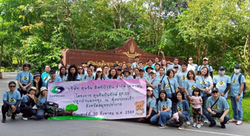
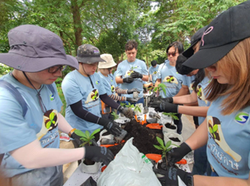
Supreme Panrak Project EP . 05 Reforestation outside the city at Khung Bang Krachao
On August 30, 2025, Supreme Distribution Public Company Limited, led by its executives and employees, jointly organized the 2nd CSR activity of 2025, the Supreme Panrak Project EP . 05 Reforestation outside the city at Khung Bang Krachao, Samut Prakan Province, by jointly engaging in activities such as seedling cultivation, waste collection along the Chao Phraya River, making interlocking bricks from foam waste, and forming EM Balls. Bio-balls help treat wastewater and restore balance to water sources, along with a visit to the Wat Chak Daeng waste sorting learning center. This activity not only helps increase green spaces for the community but also reinforces the company's commitment to conducting business in conjunction with sustainable environmental conservation, to pass on abundant natural resources to future generations.
2. Building Fish Habitats, Conserving Crab Species
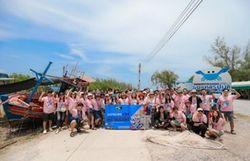
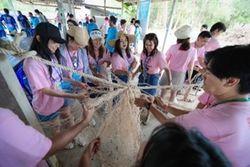
On the 10th May 2024 Supreme Distribution Public Company Limited, led by its executives and employees, participated in a CSR activity to build fish habitats and conserve crab species at the Fishery Learning Center, Ban Noen Kho Community, Noen Kho Subdistrict, Klaeng District, Rayong Province. The chairman of the Ban Noen Kho Conservation Fishery Group welcomed the delegation, introduced the network, and presented information on the origin of the Ban Noen Kho Conservation Fishery Group. They also participated in the activity of "crab egg scraping" to release young crabs back into the sea, by carefully removing eggs from ovigerous female crabs, allowing them to develop into larvae, and then releasing them into the sea to increase the crab population. Another activity was "making artificial fish habitats" (fish homes) or artificial seagrass, which are devices created by fishermen to mimic nature, by cutting ropes to match the sea depth of 10 – 15 meters. Holes are drilled to thread small ropes through, frayed, and then tied to weighted buoys. These are then released into the sea to serve as habitats and shelters for aquatic animals, as well as nurseries for small aquatic life, and homes for other organisms, creating an underwater ecosystem.
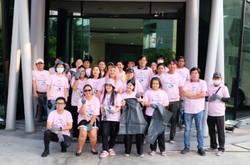
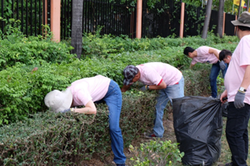
SPREME Community Project EP.02 Volunteer Waste Collection
Supreme Distribution Public Company Limited, led by its executives and employees, organized a waste collection activity around the company premises and nearby areas. A total of 3 rounds of activities were held during March 2024 to create a good environment and to lead the community in maintaining cleanliness around homes. This project was initiated to foster a sense of volunteerism among employees to help society and create a good environment for both work and residential areas.
Supreme Panrak Project EP.02 Reforestation
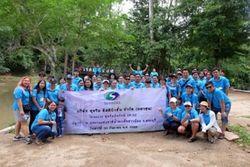
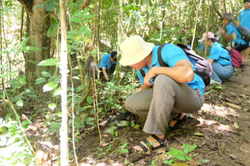
On September 30, 2023, the company organized the Supreme Panrak Project EP.02 Reforestation activity at Namtok Chet Sao Noi National Park, Saraburi Province. The objectives were to increase forest resources in nature and preserve the environment for Thai society, to foster unity within the organization, and to enable employees to participate in volunteer activities, care for the environment, and respond to the company's policy on environmental sustainability management.
Environmental Policy & Guidelines
Introduction
The Company recognizes the importance of organizational management and sustainable business operations, demonstrating care for the community and focusing on environmental responsibility. This commitment aims to enable the Company to achieve stable and continuous growth in parallel with social development. The Company will strictly adhere to the rules and regulations set forth by relevant agencies. Furthermore, the Company has established environmental sustainability management principles as a guideline to ensure that business operations are conducted with due consideration for the community and environmental accountability. All personnel within the organization, from executives to employees, are informed to understand the processes, commencing with the judicious use of resources, including electricity and water consumption, as well as the appropriate management of waste, refuse, and pollution. The Company also initiates and supports management efforts to mitigate greenhouse gas issues, extending to the implementation of appropriate oversight and performance monitoring processes, including evaluation and corrective adjustments to achieve the established objectives.
Has an Environmental Policy
Yes
Policy Description
Electricity Energy Management / Water Resource and Water Quality Management
The Company emphasizes to personnel at all levels, from executives to employees, the importance of reducing unnecessary resource consumption, such as electricity and water. This begins with promoting a culture of energy conservation, providing knowledge and recommendations on reducing electricity and water usage to prevent waste, avoiding the use of electrical appliances in unnecessary areas such as lighting systems, air conditioning systems, and office equipment, as well as repairing damaged electrical appliances to ensure the Company's office can use electrical appliances efficiently and selecting energy-saving electrical appliances. Furthermore, the Company promotes water conservation measures by ensuring thorough understanding among its personnel.
Waste and Waste Management
The Company prioritizes efficient waste management, focusing on minimizing environmental impacts throughout its operational processes. To this end, the Company has established key guidelines and measures as follows:
Promote waste reduction in operational processes according to the 3Rs concept (Reduce, Reuse, Recycle). to enhance resource efficiency and reduce waste generation.
Support the use of digital documents and online platforms for meetings, communication, and internal organizational work to reduce unnecessary paper and resource consumption.
Manage hazardous waste in accordance with relevant laws and standards, by entrusting it to specialized agencies for safe and environmentally friendly disposal.
Support the selection of environmentally friendly packaging, including the use of recycled or reusable materials, to reduce long-term environmental impacts.
Greenhouse Gas and Climate Change Management
The Company does not assess the impact of greenhouse gas issues. However, the campaign to reduce greenhouse gas emissions is currently a widespread international topic due to the effects of global warming. The Company is committed to actively supporting management efforts to mitigate greenhouse gas problems by promoting activities that can help address these issues, such as implementing mandatory measures for company personnel and visitors to turn off vehicle engines while parked on company premises, as well as managing internal office resources by switching off electrical appliances, lighting systems, air conditioning systems, and office equipment when not in use, and adhering to the principles of Reduce, Reuse, Recycle, among others.
Noise Pollution Management
The Company prioritizes the control and prevention of noise pollution that may arise from its operations, particularly from the use of company vehicles. To this end, the Company has established guidelines for regular maintenance and inspection of vehicle conditions. Each department routinely checks the levels of black smoke and noise from vehicles to ensure that the Company's vehicles are in ready-to-use condition, comply with relevant standards, and do not adversely affect surrounding communities and the environment.
Environmentally Friendly Procurement
The Company prioritizes procurement that considers environmental impacts by integrating environmental principles into the selection process for goods, services, suppliers, and business partners to support responsible and sustainable operations.
The Company supports the procurement of environmentally friendly products and services by selecting energy-efficient products certified with Energy Star, 80Plus standards. or products with environmental standards such as EPEAT Certificate, TCO Certificate.
Furthermore, the Company focuses on reducing the consumption of consumables and promoting efficient resource utilization throughout the procurement process to help mitigate environmental impacts and support the Company's sustainable operations under good corporate governance principles.
Policy Document Link
https://www.supreme.co.th/th/sustainability/environmental
Page Number in Report
-
Environmental Guidelines
| Guideline | Other — Please Specify |
|---|---|
| Electricity Management | |
| Water Management | |
| Waste Management | |
| Greenhouse Gas and Climate Change Management | |
| Noise Pollution Management | |
| Others | Procurement |
Environmental Policy Review
Policy Reviewed This Year
Yes
Review Details
The Company regularly reviews its environmental policy every 2 years or when there are changes. At the Board of Directors Meeting No. 5/2568 on August 7, 2568, The Board of Directors has considered and deemed it appropriate to maintain the existing policy without any revisions or changes.
Policies & Guidelines Changed
| Change | Other — Please Specify |
|---|---|
| Other | No revisions or amendments, and/or no modified environmental targets. |
Energy — Plan & Guidelines
Has an Energy Management Plan
No
Energy — Electricity Consumption
Electricity Consumption
| Metric | Current Year | Previous Year | Two Years Ago |
|---|---|---|---|
| Total electricity consumption within the organization (Kilowatt-Hours) | 175,690 | 169,637 | 164,840 |
| Electricity purchased for consumption from non-renewable energy sources (Kilowatt-Hours) | 175,690 | 169,637 | 164,840 |
| Electricity purchased or generated for consumption from renewable energy sources (Kilowatt-Hours) | 0 | 0 | 0 |
Energy — Fuel Consumption
Fuel Consumption
| Metric | Current Year | Previous Year | Two Years Ago |
|---|---|---|---|
| Crude oil (Barrels) | 0 | 0 | 0 |
| Coal (Metric tonnes) | 0 | 0 | 0 |
| Jet fuel (Litres) | 0 | 0 | 0 |
| Diesel (Litres) | 21,862.96 | 19,700.03 | 0 |
| Gasoline (Litres) | 4,942.85 | 6,283.14 | 0 |
| Fuel oil (Litres) | 0 | 0 | 0 |
| Natural gas (Standard cubic feet) | 0 | 0 | 0 |
| LPG (Kilograms) | 0 | 0 | 0 |
| Steam (Metric tonnes) | 0 | 0 | 0 |
Energy — Targets
Has Set Targets
No
Energy — Performance & Outcomes
Has Performance Results
Yes
Performance Description
The Company continuously promotes and campaigns for employees to use energy efficiently by establishing guidelines to turn off computer screens, electrical appliances, and all types of office equipment when not in use, along with raising awareness about appropriate energy consumption within the organization. These measures contribute to reducing electricity consumption, mitigating environmental impact, and supporting the Company's operations in alignment with its sustainability management policy.
Water Management — Overview
Introduction
The Company primarily uses water for consumption and general use within its office buildings. There is no water usage in production processes or activities that directly impact water sources. Nevertheless, the Company places importance on efficient and sustainable water resource management. Therefore, it promotes economical and appropriate water usage within the office, such as campaigning to raise employee awareness of the value of water usage, maintaining sanitary equipment in good working condition, and regularly inspecting water systems to prevent leaks. This helps reduce water consumption and supports sustainable water resource utilization.
Water — Plan & Guidelines
Has a Water Management Plan
No
Water — Withdrawal, Discharge & Consumption
Water Withdrawal, Discharge & Consumption
| Metric | Current Year | Previous Year | Two Years Ago |
|---|---|---|---|
| Total water withdrawal (Cubic meters) | 1,106 | 1,038 | 1,227 |
| Total water withdrawal by third-party water (Cubic meters) | 1,106 | 1,038 | 1,227 |
| Total water withdrawal by surface water (Cubic meters) | 0 | 0 | 0 |
| Total water withdrawal by groundwater (Cubic meters) | 0 | 0 | 0 |
| Total water withdrawal by seawater (Cubic meters) | 0 | 0 | 0 |
| Total water withdrawal by produced water (Cubic meters) | 0 | 0 | 0 |
| Percentage of wastewater treated before discharge (%) | 0 | 0 | 0 |
| Total water discharge (Cubic meters) | 0 | 0 | 0 |
| Total water discharge to third-party water (Cubic meters) | 0 | 0 | 0 |
| Total water discharge to surface water (Cubic meters) | 0 | 0 | 0 |
| Total water discharge to groundwater (Cubic meters) | 0 | 0 | 0 |
| Total water discharge to seawater (Cubic meters) | 0 | 0 | 0 |
| Total water consumption (Cubic meters) | 1,106 | 1,038 | 1,227 |
| Recycled water (Cubic meters) | 0 | 0 | 0 |
Water — Targets
Has Set Targets
No
Water — Performance & Outcomes
Has Performance Results
Yes
Performance Description
The Company has implemented appropriate water management measures by installing food waste screens, wiping off grease stains before cleaning, and installing grease traps at washing sinks to capture grease or oil mixed with wastewater, preventing it from flowing into the public drainage system. This helps reduce the risk of drainage system blockages and minimizes the potential for water pollution.
In addition, the Company provides drinking water for employees by installing and operating high-quality water filters that are certified according to relevant standards and regularly maintained and inspected to ensure the quality and safety of drinking water. These actions help reduce packaging consumption, waste volume, and environmental impact. This aligns with the Company's principles of good corporate governance and sustainable business practices.
Waste — Plan & Guidelines
Introduction
The Company prioritizes the management of waste generated from its internal operations. This focuses on reducing waste at the source, proper waste segregation, and waste management in compliance with relevant laws and standards to minimize environmental impact and effects on surrounding communities.
The waste generated from the Company's operations primarily consists of general waste and recyclable waste from office activities. The Company promotes reducing unnecessary resource consumption, utilizing digital documents for operations and internal communication, as well as appropriate waste segregation for reuse or recycling.
For hazardous waste that may arise in some cases, the Company establishes guidelines for its proper storage and management in accordance with the law. This involves entrusting it to external agencies or authorized contractors with expertise in appropriate and safe waste disposal. All such operations are subject to the Company's supervision and inspection in accordance with its practices to ensure compliance with good corporate governance principles.
Has a Waste Management Plan
Yes
Plan Description
The company has a systematic policy for managing waste and by-products generated from its operations, focusing on improving waste management processes for efficiency through proper waste segregation according to the 3R principles (Reduce, Reuse, Recycle) along with raising awareness and promoting the participation of employees and stakeholders to help reduce waste volume and minimize environmental impact.
Waste Management Guidelines based on the 3R Principles
Reduce
The company promotes the reduction of consumable materials in its operations, such as using electronic documents instead of paper, selecting reusable or biodegradable packaging, and reducing the use of single-use plastics within the workplace.
Reuse
The company supports the appropriate reuse of office equipment and packaging materials, such as using one-sided used paper as two-sided paper (Reuse). To help reduce the company's resource consumption
Recycle
The company segregates recyclable waste, such as paper, plastics, metals, and electronic waste, by providing appropriate recycling collection points in the workplace. It also develops efficient waste management systems and collaborates with relevant agencies for the environmentally sound disposal of electronic waste.
Red: Hazardous Waste
Red bin: For hazardous waste that must be disposed of correctly and with caution, such as spray cans, light bulbs, batteries, various flashlight batteries, insecticide cans, cosmetics, engine oil, and sanitary cleaner containers. These are considered hazardous waste that must be separated for disposal due to their flammability, explosiveness, corrosive properties, and toxicity.
Green: General Waste
Green bin: For general waste, which will be processed for fuel production or disposed of as appropriate. This waste cannot be recycled and cannot be separated into different categories, such as broken glass, candy wrappers, snack bags, or instant noodle packets.
Yellow: Recyclable Waste
Yellow bin: For recyclable waste, such as plastics, glass, paper, aluminum cans, steel cans, fabric scraps, and various metals. This type of waste can not only be reused without complex processing but also generate income or be sold, helping to conserve energy and resources.
Plan Document Link
https://www.supreme.co.th/th/sustainability/environmenta
Page Number in Report
-
Waste — Generation, Disposal & Recycling
Recycling — Introduction
Equipment Lifecycle Management and Electronic Waste Management
Beyond general waste management, the Company, as a System Integration service provider, recognizes the importance of Information Technology Equipment Lifecycle Management (Technology Lifecycle Management) as an integral part of its business operations. This is particularly relevant for electronic equipment associated with client projects, such as computer equipment, network devices, and digital learning tools.
The Company prioritizes the planning and tracking of equipment from procurement, usage, maintenance, and return at the end of its service life, as well as the appropriate segregation and management of end-of-life equipment. This is achieved through equipment management systems and information technology to help control equipment status and mitigate data risks before entering the end-of-life management process.
During the lease period, the Company utilizes Mobile Device Management (MDM) systems to support equipment status tracking, usage performance analysis, and preventive maintenance event management. This helps extend the lifespan of equipment, reduce premature loss, and enhance resource efficiency throughout its lifecycle.
Upon lease termination, the Company will establish a return and equipment condition assessment process based on Technology Asset Management principles to categorize appropriate management approaches, including Reuse, Refurbishment for continued use, and environmentally sound Recycling or disposal. Furthermore, the Company prioritizes Secure Data Erasure and information security control before equipment transfer to ensure transparent and auditable end-of-life equipment management.
The Company promotes the approaches of Reuse, Refurbishment for continued use, and Recycle through legally authorized entities or contractors. This ensures that electronic waste disposal is safe, minimizes environmental impact, and aligns with the Circular Economy concept. The Company plans to collaborate with legally authorized electronic waste recycling or disposal service providers, focusing on creating value from equipment utilization throughout its lifecycle rather than a disposable resource model.
To prepare for the conclusion of lease projects, the Company will carefully estimate the volume of electronic waste through a three-level Scenario Analysis: Base Case, Conservative Case, and Optimistic Case. This analysis aims to assess the proportion of equipment that can be reused and the potential volume of electronic waste. Such analysis provides the Company with insights for defining resource management strategies, cost planning, and designing operational guidelines upon lease expiration. This reflects sustainable technology management and long-term value creation for stakeholders. This approach underscores the Company's role in Responsible Technology Management, which helps reduce environmental impact while creating value from efficient technology utilization.
Waste Generation, Disposal & Recycling
| Metric | Current Year | Previous Year | Two Years Ago |
|---|---|---|---|
| Total waste generated (Kilograms) | 1,113.7 | 1,415.5 | 1,745.3 |
| Non-hazardous waste (Kilograms) | 1,113.7 | 1,375.5 | 1,745.3 |
| Non-hazardous waste - Landfilling (Kilograms) | 0 | 0 | 0 |
| Non-hazardous waste - Incineration (with energy recovery) (Kilograms) | 0 | 300 | 0 |
| Non-hazardous waste - Incineration (without energy recovery) (Kilograms) | 0 | 0 | 0 |
| Non-hazardous waste - Other disposal operations (Kilograms) | 1,113.7 | 1,075.5 | 1,745.3 |
| Hazardous waste (Kilograms) | 0 | 40 | 0 |
| Hazardous waste - Landfilling (Kilograms) | 0 | 40 | 0 |
| Hazardous waste - Incineration (with energy recovery) (Kilograms) | 0 | 0 | 0 |
| Hazardous waste - Incineration (without energy recovery) (Kilograms) | 0 | 0 | 0 |
| Hazardous waste - Other disposal operations (Kilograms) | 0 | 0 | 0 |
| Total reused/recycled waste (Kilograms) | 1,113.7 | 1,075.5 | 1,745.3 |
| Reused/Recycled non-hazardous waste (Kilograms) | 1,113.7 | 1,075.5 | 1,745.3 |
| Reused non-hazardous waste (Kilograms) | 0 | 0 | 0 |
| Recycled non-hazardous waste (Kilograms) | 1,113.7 | 1,075.5 | 1,745.3 |
| Reused/Recycled hazardous waste (Kilograms) | 0 | 0 | 0 |
| Reused hazardous waste (Kilograms) | 0 | 0 | 0 |
| Recycled hazardous waste (Kilograms) | 0 | 0 | 0 |
Waste — Targets
Has Set Targets
No
Waste — Performance & Outcomes
Has Performance Results
Yes
Performance Description
The Company has initiated campaigns to foster cooperation among personnel for managing waste, refuse, and pollution in all processes. This begins with promoting reduction (Reduce) by controlling the amount of paper used for data storage, shifting to storing and managing central databases using information technology systems, such as storing data on One Drive, and transmitting internal organizational data via email. The Company aims to reduce unnecessary printing or photocopying, and in necessary cases, encourages printing or copying on both sides of the paper. This is to promote the Company's business operations to reduce paper usage and be environmentally friendly. Furthermore, personnel are encouraged to understand the importance of reuse (Reuse), such as reusing single-sided printed paper, and to always prioritize the selection of recyclable resources (Recycle).
Paper Recycling Plastic Recycling

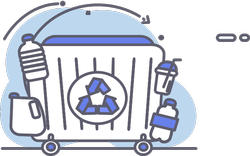
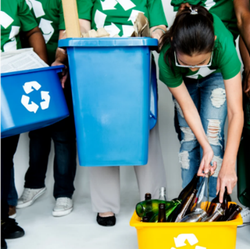
In addition, the Company also implements proper waste separation according to international standards. This includes separating waste into organic waste, which is putrescible and decomposes quickly; recyclable waste, which can be processed for new uses; hazardous waste, which is dangerous or contains hazardous chemical components; and general waste, which is other waste apart from organic, recyclable, and hazardous waste, for the benefit of the public in waste disposal.
GHG — Plan & Guidelines
Has a GHG Management Plan
No
GHG — Emissions
GHG Emissions
| Metric | Current Year | Previous Year | Two Years Ago |
|---|---|---|---|
| Total GHG emissions (Metric tonnes of carbon dioxide equivalent) | 176.06 | 176.14 | 0 |
| Total greenhouse gas emissions 1 (Metric tonnes of carbon dioxide equivalent) | 78.61 | 75.74 | 0 |
| Total greenhouse gas emissions 2 (Metric tonnes of carbon dioxide equivalent) | 97.45 | 100.4 | 0 |
| Total greenhouse gas emissions 3 (Metric tonnes of carbon dioxide equivalent) | 0 | 0 | 0 |
GHG — Emissions Verification
Emissions Verified by a Third Party
No
GHG — Targets
Has Set GHG Targets
No
GHG — Performance & Outcomes
Has Performance Results
Yes
Performance Description
Management Approach to Reduce Greenhouse Gas Emissions
The Company has not conducted any assessment of its greenhouse gas impact. However, the campaign to reduce greenhouse gas emissions is currently a widespread international topic due to the effects of global warming. The Company is committed to actively supporting management efforts to mitigate greenhouse gas issues by promoting activities that can help address these problems. Examples include implementing mandatory measures for company personnel and visitors to turn off vehicle engines while parked on company premises, as well as managing office resources by switching off electrical appliances, lighting systems, air conditioning systems, and office equipment when not in use, and adhering to the principles of Reduce, Reuse, Recycle.
Environmental Legal Incidents
Legal Violation Incidents
| Metric | Current Year | Previous Year | Two Years Ago |
|---|---|---|---|
| Number of cases or incidents of legal violations or negative environmental impact (cases) | 0 | 0 | 0 |
Employees — Plan & Guidelines
Has an Employee Management Plan
Yes
Plan Description
Fair employee compensation
The Company has established a compensation policy based on principles of fairness, transparency, and competitiveness, primarily considering employees' skills, knowledge, abilities, experience, and performance. Furthermore, the Company adjusts its compensation structure to align with economic conditions and the labor market, aiming to maintain competitiveness and attract high-potential personnel.
The Company has a clear and transparent performance evaluation system, where evaluation results are used as criteria for adjusting compensation and annual bonus payments. Additionally, the Company conducts annual salary reviews based on the Key Performance Indicators (KPI) system to appropriately reflect employee performance.
Regarding welfare, the Company prioritizes the quality of life and well-being of its employees by providing comprehensive benefits such as annual health check-ups, medical expenses, and a provident fund. Group health insurance and other appropriate benefits to enhance long-term stability and motivation for work.
Employee training and development
The Company has established a personnel development policy to promote the development of essential knowledge, abilities, skills, and potential for executives and employees in both present and future operations. Recognizing the value of human resources in driving the Company's sustainable growth, the Company prioritizes personnel development and promotes the enhancement of their knowledge and capabilities as follows:
Develop a suitable Skill Matrix according to job positions.
Evaluate employees according to the skill matrix standard and develop Individual Development Plans (IDP) by assessing performance competencies and identifying gaps to plan employee development for the following year. Personnel development includes:
(1) In-the-Job Training: Supervisors or managers provide instruction and guidance during work, such as basic knowledge of installation techniques, preliminary product maintenance procedures, and product quality inspection and control processes.
(2) In-house Training: Departments/divisions organize internal training to foster understanding and enhance knowledge and abilities, such as product knowledge, departmental operating procedures, and workplace safety.
(3) Public Training: Training is arranged with external institutions, and employees follow the training procedures.
(4) Support for other forms of employee self-learning as a channel for self-development and promoting unlimited learning. Employees can learn anywhere, anytime, including E-learning. The Company provides a knowledge repository that employees can access for training at their convenience.
The Human Resources and Administration Department is responsible for personnel development, covering the following key areas:
(1) Assess the Company's personnel development needs and requirements and prepare an annual training plan along with an annual budget. This training plan will align with essential needs and prepare employees to take on increased responsibilities in line with career advancement and their ability to fill vacant positions according to the workforce plan.
(2) Monitor training plans. After employees complete development training, the results will be evaluated and monitored to measure the success of the training in various aspects. The development budget will be controlled to stay within the planned and allocated budget. The results of completed training will be evaluated and monitored.
(3) Systematically and continuously collect data related to personnel training to achieve the Company's policy of promoting and retaining high-potential personnel, with a focus on developing personnel's learning to grow alongside the Company's progress.
Plan Areas
| Plan Area |
|---|
| Fair employee compensation |
| Employee training and development |
Employees — Workforce
Introduction
The Company has a transparent, fair, and systematic process for recruiting and selecting employees, primarily considering the qualifications, knowledge, abilities, and attitudes of applicants to align with job positions and organizational values. The Company emphasizes the principles of equality and fairness, without discrimination or segregation based on origin, race, gender, age, skin color, religion, physical ability, financial status, lineage, educational institution, or any other status not directly related to job performance. Furthermore, the Company promotes equal opportunities for employee development and career advancement, using ability and performance as criteria for consideration, without discrimination based on the aforementioned personal differences. As of the end of 2025, the Company has a total of 95 employees.
Workforce Data
| Metric | Current Year | Previous Year | Two Years Ago |
|---|---|---|---|
| Total number of employees (Persons) | 95 | 98 | 98 |
| Number of male employees (Persons) | 53 | 55 | 56 |
| Number of female employees (Persons) | 42 | 43 | 42 |
| Total employment of disabled persons (people) | 0 | 0 | 0 |
| Total disabled employees (people) | 0 | 0 | 0 |
| Total male disabled employees (people) | 0 | 0 | 0 |
| Total female disabled employees (people) | 0 | 0 | 0 |
| Total disabled workers who are non-employee (people) | 0 | 0 | 0 |
| Contributions to the fund for promoting and improving the quality of life for disabled persons | 0 | 0 | 0 |
| Total number of male employees in operational level (Persons) | 38 | 39 | 40 |
| Total number of male employees in management level (Persons) | 12 | 13 | 14 |
| Total number of male employees in executive level (Persons) | 3 | 3 | 2 |
| Total number of female employees in operational level (Persons) | 30 | 30 | 30 |
| Total number of female employees in management level (Persons) | 8 | 9 | 8 |
| Total number of female employees in executive level (Persons) | 4 | 4 | 4 |
Employees — Remuneration & Provident Fund
Introduction
Management of Wages, Remuneration, and Benefits
The Company has established both short-term and long-term employee compensation policies. These policies consider the knowledge, skills, experience, and performance evaluation results of each individual employee, as well as the Company's operating results, utilizing performance measurement based on Key Performance Indicators (KPIs). Therefore, employees at all levels will receive appropriate and fair compensation.
In addition, the Company has established a salary and welfare structure that is appropriate and competitive, by benchmarking against companies in the same business group, to ensure employees receive fair compensation commensurate with their roles, responsibilities, and performance. Employee compensation and benefits include salaries, annual bonuses, provident fund contributions, annual health check-ups, and medical welfare, among others. Furthermore, the Company also provides other benefits and welfare to support employee performance and enhance their quality of life, such as allowances for business trips to other provinces, accommodation benefits for employees, and sports welfare to promote health and well-being, including badminton and football activities.
Remuneration & Provident Fund
| Metric | Current Year | Previous Year | Two Years Ago |
|---|---|---|---|
| Total disabled employees (people) | 65,001,283.13 | 60,652,904.34 | 58,607,326.41 |
| Total male employee remuneration (Baht) | |||
| Total female employee remuneration (Baht) | |||
| Number of employees eligible to participate in PVD (persons) | 91 | 97 | 92 |
| Total number of employees joining employee provident fund (Persons) | 55 | 54 | 52 |
| Percentage of total number of employees joining employee provident fund to total number of employees (%) | 57.89 | 55.1 | 53.06 |
| Number of PVD members / Total eligible employees (%) | 60.44 | 55.67 | 56.52 |
| Total amount of provident fund contributed by the Company (Baht) | 610,773.15 | 533,388.41 | 398,648.16 |
| Total amount of provident fund contributed by employee (baht) | 1,648,675.58 | 1,455,307.26 | 998,077.8 |
Employees — Training & Development
Introduction
The Company consistently allocates an annual budget for developing the potential of employees at all levels through training and seminars. This ensures that the Company's employees can effectively advise on products and provide services to customers, keeping pace with the ever-changing business landscape. Employees are considered the core and vital force in driving business operations towards sustainable growth.
The Company therefore places importance on developing personnel in all aspects to ensure employees are prepared, possess skills, and have the potential for innovation, enabling them to effectively cope with changes. The Company focuses on providing continuous training for all employees at all levels to achieve maximum knowledge and expertise in their work, thereby meeting the Company's goals and strategies and supporting future business growth.
In 2025, the Company developed personnel competencies through both internal and external training courses. A total of 95 employees attended the training, comprising 53 male employees (55.79% of all employees) and 42 female employees (44.21% of all employees). The total cost for personnel development amounted to 211,044.71 Baht.
Courses Offered in 2025
|
Category Training |
Course |
Number of Hours |
Number of Trainees |
Number of Female Trainees |
Number of Male Trainees |
|
Internal Training |
Anti-Corruption Policy |
01:00 |
101 |
44 |
57 |
|
Business Ethics and Code of Conduct |
01:00 |
100 |
44 |
56 |
|
|
Company and Customer Confidentiality Policy |
01:00 |
99 |
43 |
56 |
|
|
Sustainability Management Policy |
01:00 |
95 |
39 |
56 |
|
|
Environmental Awareness ISO 14001:2015 and Basic Knowledge of ISO 9001:2015 Standard System |
01:00 |
99 |
44 |
55 |
|
|
English for Communication |
04:30 |
29 |
15 |
14 |
|
|
Basic Excel Usage |
06:00 |
27 |
21 |
6 |
|
|
Intermediate Excel Usage |
04:00 |
19 |
14 |
5 |
|
|
Principles of Creative Problem Solving |
02:00 |
9 |
3 |
6 |
|
|
Knowledge of the Personal Data Protection Act (PDPA) |
06:00 |
53 |
32 |
21 |
|
|
Internal Training (Cont.) |
Information Security Management System Standard Requirements |
03:00 |
26 |
16 |
10 |
|
Internal Audit according to Information Security Management System Standards |
06:00 |
15 |
9 |
6 |
|
|
Internal Audit ISO27001:2022 |
02:00 |
13 |
8 |
5 |
|
|
Internal Audit Plan for ISO20000-1:2018 Service Management System |
02:30 |
12 |
7 |
5 |
|
|
External Training |
Microsoft 365 Copilot Master Class |
03:00 |
38 |
23 |
15 |
|
AI & Data Synergy: Driving Sustainable Organizations |
02:30 |
35 |
16 |
19 |
|
|
AI Governance Webinar 2025 EP.2 l Agentic AI: When AI Makes Decisions for Humans, Who is in Control? |
01:00 |
19 |
10 |
9 |
|
|
AI for Business Transformation |
02:00 |
18 |
7 |
11 |
|
|
Choosing the Right AI Tool for Your Organization |
02:00 |
18 |
13 |
5 |
|
|
Productive Coaching & Feedback |
01:30 |
16 |
5 |
11 |
|
|
Secure Data, Stable Business: Strategies for Modern Organizations |
01:00 |
13 |
6 |
7 |
|
|
PDPA GURU: Internal Audit - How Prepared are Internal Auditors to Help Reduce PDPA Risks? |
02:00 |
13 |
9 |
4 |
|
|
Positive Communication Skills |
01:00 |
9 |
6 |
3 |
|
|
Costly Lessons to Counter Cyber Threats: Supply Chain Attack |
01:30 |
7 |
2 |
5 |
|
|
AI Insight Series |
02:00 |
7 |
2 |
5 |
|
|
AI Strategy & Preparation |
02:45 |
6 |
1 |
5 |
|
|
Information Systems in Logistics |
02:00 |
6 |
0 |
6 |
|
|
Microsoft Licensing Updated |
02:00 |
6 |
5 |
1 |
|
|
AI Platform & Immersive AI |
02:45 |
6 |
1 |
5 |
|
|
Advanced Endpoint Protection and EDR with Microsoft Defender |
03:00 |
6 |
1 |
5 |
|
|
AI Governance The Key to Ethical and Strategic Organization |
01:30 |
6 |
1 |
5 |
|
|
Discover Microsoft Azure: Introduction to Cloud Solution Development |
03:00 |
6 |
1 |
5 |
|
|
Enterprise GenAI & Use Cases |
02:45 |
6 |
1 |
5 |
|
|
Gen AI Elevates Organizations, Accelerating Workflows |
01:00 |
6 |
1 |
5 |
|
|
External Training (Cont.) |
HP Support Cybersecurity Service Qualification |
01:00 |
6 |
2 |
4 |
|
Zyxel Webinar Nebula 2025 |
01:30 |
6 |
1 |
5 |
|
|
Microsoft 365 Copilot Master Class |
03:00 |
38 |
23 |
15 |
Training Data
| Metric | Current Year | Previous Year | Two Years Ago |
|---|---|---|---|
| Average employee training hours (Hours / Person / Year) | 30.4 | 32.53 | 25.43 |
| Employee development and training expenses (baht) | 211,044.71 | 297,254.51 | 94,044.47 |
Employees — Occupational Health & Safety
Introduction
The Company ensures that employees at all levels receive workplace safety and a suitable working environment to prevent potential health risks arising from work, thereby improving the quality of life for employees and increasing motivation for collaboration towards sustainable organizational development. Furthermore, the Company emphasizes providing knowledge, understanding, and appropriate safety practices in the workplace, ranging from basic first aid knowledge and appropriate emergency response plans, such as in the event of a fire, as well as arranging annual health check-ups to regularly monitor employee health.
In 2025, the Company regularly organized operational safety training for executives and employees, such as annual fire drills and evacuation exercises, to enhance preparedness for emergency situations and reduce potential risks in the workplace.
Occupational Health & Safety Data
| Metric | Current Year | Previous Year | Two Years Ago |
|---|---|---|---|
| Total number of lost time injury incidents by employees (Cases) | 0 | 0 | 0 |
Employees — Labour Relations
Introduction
The company plans to further develop employee engagement, starting with improving the workplace environment and atmosphere to promote good health and hygiene, safety, and a more modern and aesthetically pleasing setting. The company has provided various facilities such as relaxation zones and working space zones. etc. It also supports joint activities between employees and management to strengthen good relationships within the organization, such as New Year parties, team-building activities, and outing events. annually, etc. In 2025, The company had 4 voluntary employee resignations. people, or 4.21 percent. of the total number of employees.
Labour Relations Data
| Metric | Current Year | Previous Year | Two Years Ago | Remark |
|---|---|---|---|---|
| Proportion of voluntary resignations (%) | 4 | 5 | 5 | |
| Total voluntary resignations (Persons) | 4 | 5 | 5 | Voluntary employee resignations will only be counted for employees who have completed their probationary period. |
| Male employees who voluntary resigned (Persons) | 3 | 4 | 3 | |
| Female employees who voluntary resigned (Persons) | 1 | 1 | 2 | |
| Percentage of employee turnover leaving the Company voluntarily (%) | 4.21 | 5.1 | 5.1 | |
| Evaluation result of employee engagement | 0 | 1 | 0 | The Company mandates that all employees possess a core competency in "organizational loyalty and commitment," which will be assessed every two years. |
Employees — Employee Representation
Introduction
The company emphasizes employee participation in the process of overseeing and developing internal welfare. Therefore, a Welfare Committee has been established within the establishment to perform the duties of
-
to consult with employers to provide welfare for employees.
-
to provide consultation and recommendations to employers regarding welfare arrangements for employees.
-
to monitor and supervise the welfare arrangements provided by employers to employees.
-
to provide opinions and guidelines for arranging beneficial welfare for employees, acting as representatives of employees at all levels.
In addition, the Welfare Committee serves as an intermediary between management and employees. to collect welfare-related suggestions/complaints, analyze needs based on welfare utilization data, and propose development plans that are cost-effective, transparent, and measurable, adhering to principles of comprehensive and verifiable communication, in order to continuously enhance the quality of working life.
Employees Are Represented Collectively
Yes
Forms of Representation
| Form |
|---|
| Welfare committee |
Employees — Targets
Has Set Employee Targets
Yes
Targets
| Indicator | Target Areas | Base Year | Base Year — Description | Target Year | Target Year — Description |
|---|---|---|---|---|---|
| Control and monitor the number of employee training courses. | 2984 · Description: Employee training and development | 2,024 | Manage and oversee the number of employee training courses to achieve 11 courses per person per year. | 2,025 | Oversee the number of employee training courses to achieve 13 courses per person per year. |
| Complaints regarding corruption | 2989 · Description: Non-discrimination | 2,024 | Complaints: 0 | 2,025 | Complaints: 0 |
Employees — Performance & Outcomes
Has Performance Results
Yes
Performance Description
Performance in employee and labor management, Year 2025
The Company emphasizes fair, transparent, and sustainable human resource management, aiming to create a work environment conducive to employee potential development, fostering organizational commitment, and ensuring appropriate quality of work life. The Company considers compensation and welfare, career development and advancement, promotion of good internal relationships, occupational health and safety, as well as respect for human rights of employees at all levels.
Employee Compensation and Welfare Benefits
The Company implements a compensation policy based on fairness, transparency, and competitiveness within the industry, considering employees' knowledge, abilities, responsibilities, and performance, to create work motivation and foster organizational commitment. Key performance in the year 2025 It can be summarized as follows:
Annual Compensation Adjustment
The Company considers annual compensation adjustments based on established criteria, referencing employee performance, economic conditions, and labor market trends, to ensure that compensation is appropriate and reflects the value of work and the potential of personnel.
Performance-based Bonus Payment
The Company considers the payment of annual bonuses by taking into account the overall performance of the Company, coupled with the performance of employees, as a reward for their dedication to work and to boost morale.
Employee Welfare Benefits
The Company provides appropriate and comprehensive welfare benefits to promote the quality of life and security of its employees, categorized as:
(1) Health and Security, such as providing health insurance and a provident fund, to enhance long-term security.
(2) Welfare benefits for various occasions in accordance with the Company's rules and regulations, to appropriately support employees' livelihoods and work performance.
2. Employee Training and Development
The Company prioritizes the development of employee potential by focusing on providing appropriate training that aligns with career advancement, to build capable personnel, respond to business objectives, and support the long-term growth of the organization.
Customer Management — Overview
Introduction
Importance
The Company places importance on and strictly adheres to relevant laws, regulations, and guidelines, as stipulated in its Good Corporate Governance and Business Ethics Policy. This policy covers the delivery of quality, standardized, and timely products and services that meet or exceed customer expectations, under fair and transparent conditions.
The Company accurately, sufficiently, and timely discloses information about the company to enable customers and stakeholders to make appropriate decisions. Furthermore, it places great importance on maintaining customer confidentiality by adhering to policies and codes of conduct regarding confidentiality, data storage, data usage, and the prevention of improper use of inside information. This includes strict protection of customer data and trade secrets, without using any information for personal gain or for the benefit of related parties in an unethical manner.
In addition, the Company prioritizes responding to customer needs quickly and efficiently by providing systems and channels for complaints or suggestions regarding services, as well as regularly surveying customer satisfaction, to analyze the collected data and use it for continuous improvement of the Company's operations.
Customers — Plan & Guidelines
Has a Customer Management Plan
Yes
Plan Description
Developing customer satisfaction and strengthening customer relationships.
The Company places importance on continuously building and maintaining good relationships with customers and partners, primarily based on understanding customer needs. The Company's management team and personnel possess experience and expertise in information technology operations and have a thorough understanding of the business characteristics and needs of each customer group. This enables the Company to analyze requirements, design solutions, and provide services that align with the objectives and plans set by customers.
The Company focuses on providing quality services, from the design, procurement, and installation of information technology systems to maintenance and after-sales services, taking into account standards, security, and system continuity, to ensure that customers receive maximum benefits from their investment and can operate their businesses efficiently.
Furthermore, the Company emphasizes close communication and coordination with customers, providing opportunities for customers to express opinions, suggestions, and complaints, which are used as information for continuous improvement and development of service quality. This has resulted in the Company gaining continuous and long-term trust from customers and partners in providing information technology services.
These operations help foster satisfaction, trust, and sustainable relationships with customers and partners, which are crucial factors in supporting the Company's business growth and long-term competitiveness.
Data Privacy Protection.
The Company recognizes the importance of protecting the personal data of all stakeholder groups, especially the personal data of customers that the Company collects, uses, discloses, and transfers for service provision. The Company systematically manages personal data by defining appropriate purposes for data use to provide services that meet customer needs, under the principles of necessity, appropriateness, and data security.
The Company is committed to being responsible for and protecting the personal data of all stakeholders, including shareholders, employees, customers, partners, and creditors, among others, by announcing its Privacy Policy. on the Company's website at www.supreme.co.th and appointed a Data Protection Officer (DPO). responsible for overseeing and ensuring personal data protection in accordance with relevant laws.
The Company's personal data protection framework is in compliance with the Personal Data Protection Act B.E. 2562 (2019) (Personal Data Protection Act: PDPA). which covers essential details such as types of personal data, purposes of collection, use, and disclosure of data, entities or individuals to whom data may be disclosed, data retention period, data security measures, cookie policy, rights of the personal data owner, as well as contact channels for exercising rights related to personal data.
In 2025. The Company has not received any complaints regarding the violation of customers' personal data.
Plan Areas
| Plan Area |
|---|
| Development of customer satisfaction and customer relationship |
| Protection of customer personal information |
Customers — Satisfaction Results
Customer Satisfaction Results
| Metric | Current Year | Previous Year | Two Years Ago |
|---|---|---|---|
| Evaluation results of customer satisfaction | 1 | 1 | 1 |
Customers — Targets
Has Set Customer Targets
Yes
Targets
| Indicator | Target Areas | Base Year | Base Year — Description | Target Year | Target Year — Description |
|---|---|---|---|---|---|
| Customer Satisfaction | 3009 · Description: Development of customer satisfaction and customer relationship | 2,024 | The average score is 3.59 out of a maximum of 4. | 2,025 | The average score is 3.51 out of a maximum of 4. |
Customers — Performance & Outcomes
Has Performance Results
Yes
Performance Description
Customer Management: Customer Satisfaction
The Company places great importance on conducting business with its customers, regularly conducting annual customer satisfaction surveys to continuously strengthen the bond and good relationship between the Company and its customers. This also serves as a guideline for listening to feedback, suggestions, and resolving customer complaints accurately, appropriately, and promptly.
The Company will present the results of the customer satisfaction survey to the Executive Committee meeting for use in planning, management, and improving the quality of services and product delivery. Furthermore, customer data and feedback will be communicated to relevant departments to enhance operational efficiency and better meet customer needs.
Customer Satisfaction Survey Year 2025
To understand customer expectations, problems, needs, and various impacts, the Company conducts annual customer satisfaction surveys. The results of these surveys For the year 2025, it was found that customers were satisfied with the Company's services, with a total score of 5,307 out of a full score of 6,048, representing 87.75%. When compared to the average score of 3.51 out of a full score of 4.00, the evaluation result is at the level of “ Excellent ”
The results of customer satisfaction surveys over the past 3 years are summarized as follows:
Year 2023, the customer satisfaction level was 94.81%.
Year 2024, the customer satisfaction level was 89.71%.
Year 2025, the customer satisfaction level was 87.75%.
Community & Social — Overview
Introduction
The Company prioritizes continuous involvement in community and social development, focusing on promoting educational opportunities and enhancing the quality of life for youth in various areas. Annually, the Company consistently organizes Corporate Social Responsibility (CSR) activities, such as the donation of computers and educational media equipment to schools and educational institutions to support learning and access to technology for underprivileged students and youth, as well as the improvement and development of school environments, such as renovating school buildings, playgrounds, and activity areas, to enhance safety and facilitate learning and skill development for children and youth.
Additionally, the Company also provides support for the donation of consumer goods and essential equipment to communities and relevant organizations as appropriate. These activities are conducted continuously on an annual basis, reflecting the Company's commitment to conducting business alongside creating value for communities and society for long-term sustainable growth.
Community & Social — Plan & Guidelines
Has a Community & Social Plan
Yes
Plan Description
Education
The Company aims to promote educational opportunities and access to information technology for youth by continuously supporting educational activities, such as donating computers, information technology equipment, and teaching materials to schools and educational institutions in various areas, as well as improving school buildings and the internal school environment to facilitate appropriate learning and skill development for students and youth.
Sports and Recreation
The Company has allocated a budget to support the expenses of Supreme Volleyball Club Co., Ltd. ("Supreme Club") for conducting club-level sports competitions. This support began in 2009 and continues to the present (Supreme Club was registered as a legal entity in 2011). The supported expenses cover food, accommodation, travel costs, and modern equipment for training, as well as the hiring of coaches, trainers, sports scientists, doctors, and expert teams with knowledge, abilities, and experience. This support helps provide opportunities for youth and athletes to develop their potential, bringing recognition to themselves, the club, society, and the nation. The club's success also reflects positively on the image of its supporters.
Underprivileged and Vulnerable Groups
The Company appropriately conducts activities to assist and support underprivileged and vulnerable groups in society by providing consumer goods, essential equipment, and other support to communities, schools, foundations, or relevant organizations to alleviate hardship and improve the quality of life for target groups, as opportunities and circumstances permit.
Plan Areas
| Plan Area |
|---|
| Education |
| Sports and recreation |
| Disadvantaged and vulnerable groups |
Community & Social — Targets
Has Set Community & Social Targets
Yes
Targets
| Indicator | Target Areas | Base Year | Base Year — Description | Target Year | Target Year — Description |
|---|---|---|---|---|---|
| Conduct CSR activities at least once a year. | 3037 · Description: Education · 3040 · Description: Sports and recreation | 2,024 | 1. Promotion and Development in Education 2. Supreme Panrak Project EP.03: '30 Years IT for Children' | 2,025 | 1. Supreme Panrak Project EP.04: Sharing Happiness with Children at Wat Kuttakian School. 2. Project Activity: 'SP Dedicated Volunteers' EP.04 for the Lue-Kor Project of Nokkamin Foundation. |
Community & Social — Performance & Outcomes
Has Performance Results
Yes
Performance Description
Over the past year, Supreme Distribution Public Company Limited has carried out community and social activities according to its established management plan, focusing on continuous engagement with communities and stakeholders in its operational areas. The activities undertaken cover education, sports and recreation, as well as assisting underprivileged and vulnerable groups in society.
Educational Performance and Social Activities
The company prioritizes promoting and developing education as a crucial foundation for sustainable human resource and social development. The company has supported schools and educational institutions in various areas through the donation of computers, information technology equipment, and teaching materials, as well as improving the internal environment of schools, to enhance access to technology, elevate the quality of learning, and create a suitable and safe environment for students and youth.
-
Promotion and Development in Education
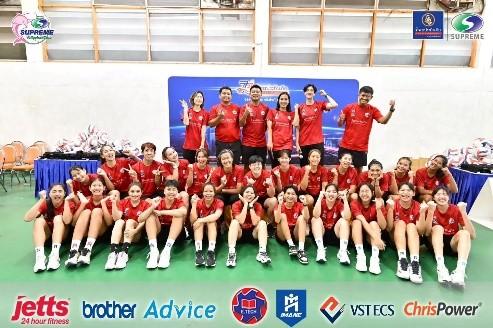
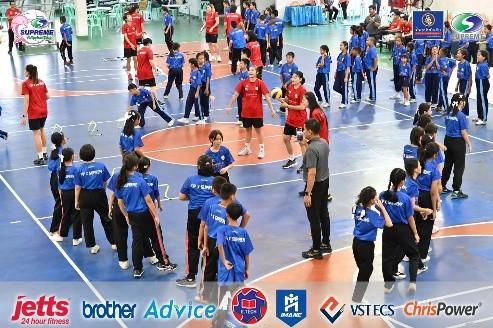
On November 20, 2024, Supreme Thippaya Chonburi-E.Tech Volleyball Club, in collaboration with Thippaya Insurance Public Company Limited and Company
Supreme Distribution Public Company Limited organized the "Thippaya Volleyball Clinic 3rd Edition" at the Sports Science, Recreation, and Cultural Plaza of Bang Pu Subdistrict Municipality, Samut Prakan Province, with a total of 130 students from schools in Samut Prakan Province participating in the activity. The aforementioned activities aim to promote learning alongside the development of sports skills, foster discipline, teamwork, and productive use of leisure time, thereby supporting the holistic development of youth in terms of education, health, and life skills.
-
Supreme Pan Rak Project EP.03 "30 Years of IT for Children"
Supreme Distribution Public Company Limited celebrates its 30th anniversary on the 15th. December 2023 is a special opportunity for the company to promote equal access to digital infrastructure for students. Therefore, the company organized a project to donate computers to underprivileged schools that lack sufficient computers for the number of students per class and face difficulties in conducting classroom learning activities. In this activity, the company donated computers to a total of 40 schools, 300 computers units. If schools receive support for computer donations for education this time, it will enable students to utilize them comprehensively for learning and teaching, leading to progressively higher academic achievements.
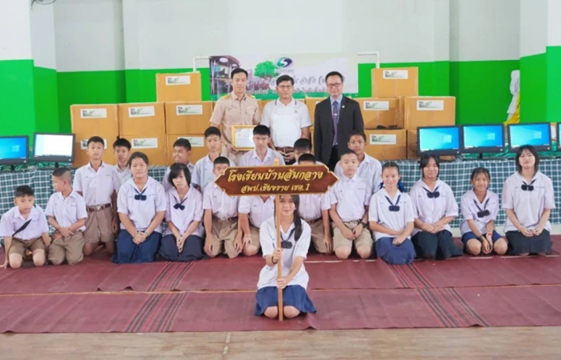
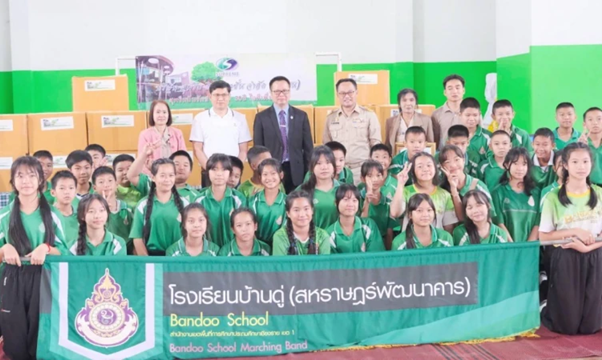
Social Activities
-
Supreme Pan Rak Project EP . 04 Sharing Happiness with Children at Wat Kut Takian School
On March 15, 2025, Supreme Distribution Public Company Limited, led by its management team and employees, participated in a CSR activity. 1st/2025 Supreme Pan Rak Project EP . 04 Sharing Happiness with Children at Wat Kut Takian School, Khao Phra Subdistrict, Mueang District, Nakhon Nayok Province. Wat Kut Takian School, Nakhon Nayok Province, is a small rural school lacking in many aspects. It has approximately 100 students, most of whom come from impoverished backgrounds. There is no school director, and only 6 government teachers and educational personnel.
Activities included renovating computer rooms and multi-purpose buildings, installing electrical systems and lighting for multi-purpose domes, painting and refurbishing dining tables, improving sports fields and playgrounds, and donating teaching materials, storybooks, and sports equipment. The objective was to restore dilapidated public utility systems to a usable condition, thereby creating a good environment for the school, ensuring computer rooms are ready for use, and facilitating learning activities. It also aimed to foster internal unity within the organization, allowing employees to participate as volunteers in community and social development, and responding to the company's policy on social dimension sustainability management.
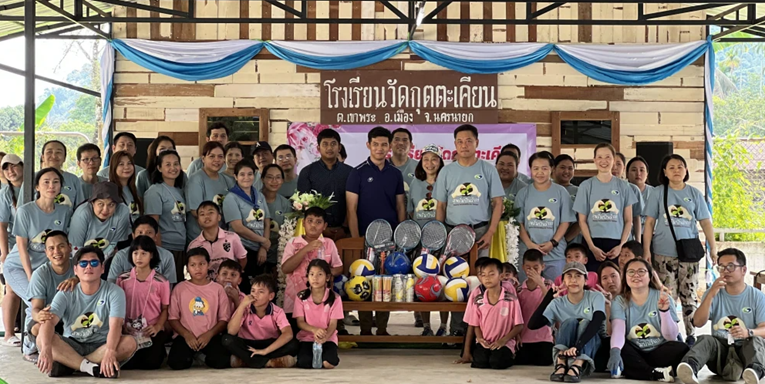
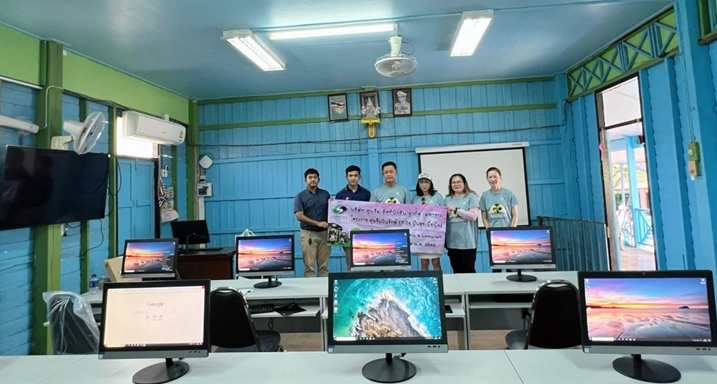
Performance in Supporting Underprivileged and Vulnerable Groups
Corporate Social and Environmental Responsibility (CSR) Working Group represented in delivering donations to the "Leftover-Requested" Project of Baan Nokkamin Foundation, which was continuously organized again during the year-end period of 2025. by collecting donations such as clothes for all genders and ages, shoes, bags, electrical appliances, school supplies, and dried food from the management team and employees of the company, as well as philanthropists who wished to donate items to Baan Nokkamin Foundation. These items would be sold at charity shops to generate income to support food, education, and care for orphaned children, underprivileged children, and those under the foundation's care. In addition to making merit and sharing usable items to maximize their value, it also helps organize homes, pass on unused but still useful items, thereby reducing waste and the use of new resources, promoting a culture of sharing and efficient resource utilization, to create a more caring and supportive society.
-
"SP People Full Volunteer" Project EP.04 for the "Leftover-Requested" Project of Baan Nokkamin Foundation
On December 26, 2025, the Corporate Social and Environmental Responsibility (CSR) Working Group represented in delivering donations from the "SP People" project "Full Volunteer" EP.04 for the "Leftover-Requested" Project of Baan Nokkamin Foundation, which was continuously organized again during the year-end period. This involved collecting donations such as clothes for all genders and ages, shoes, bags, electrical appliances, school supplies, and dried food from the management team and employees of the company, as well as philanthropists who wished to donate items to Baan Nokkamin Foundation. These items would be sold at charity shops to generate income to support food, education, and care for orphaned children, underprivileged children, and those under the foundation's care. In addition to making merit and sharing usable items to maximize their value, it also helps organize homes, pass on unused but still useful items, thereby reducing waste and the use of new resources, promoting a culture of sharing and efficient resource utilization, to create a more caring and supportive society.
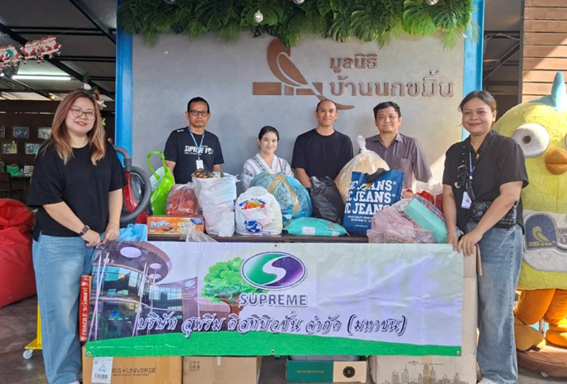
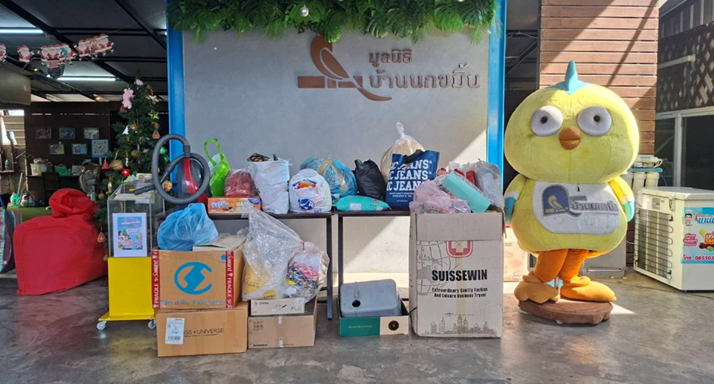
From the implementation of the aforementioned activities, The company has fostered good relationships with communities and stakeholders, reflecting its commitment to conducting business alongside sustainable community and social development. The results of these operations will be used as a guideline for further developing and improving community and social management more efficiently in the future.
Law Violation Incidents
Law Violation Incidents
| Metric | Current Year | Previous Year | Two Years Ago |
|---|---|---|---|
| The total number of cases or incidents of significant violations of laws or regulations regarding social and human rights (Cases) | 0 | 0 | 0 |
| The total number of cases or incidents that cause significant labor disputes (Cases) | 0 | 0 | 0 |
| The total number of cases or complaints related to consumer rights violations (Cases) | 0 | 0 | 0 |
| The total number of cases or complaints related to partner rights violations (Cases) | 0 | 0 | 0 |
| The total number of cases or incidents that cause disputes with the community/society (Cases) | 0 | 0 | 0 |
| The total number of cases or incidents related to cyber security or customer data breaches (Cases) | 0 | 0 | 0 |
| The total number of cases or incidents related to safety and occupational health at work (Cases) | 0 | 0 | 0 |